
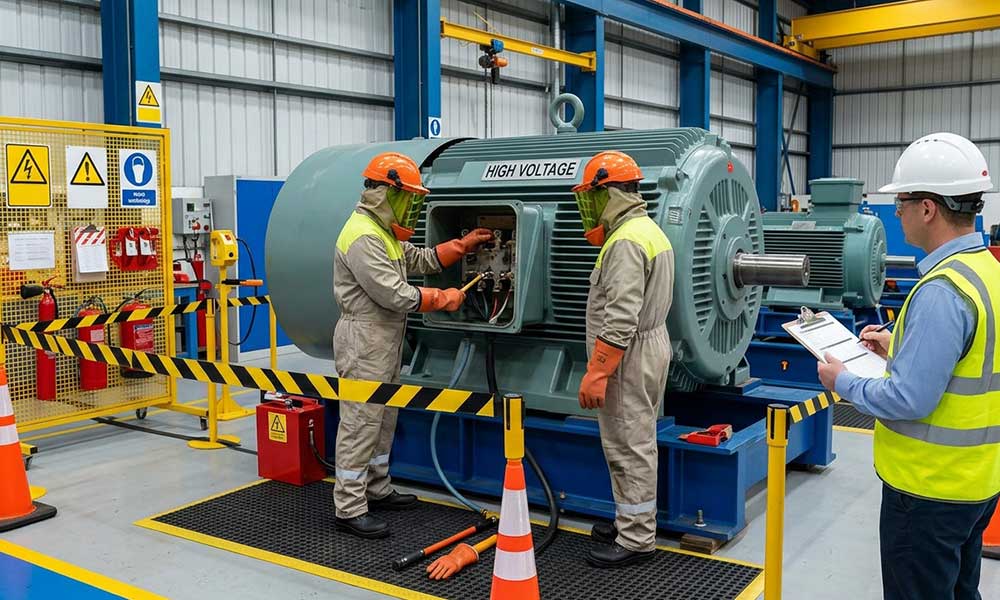
High voltage motors are not something you hand over to just anyone. A mistake during HV motor repair doesn’t just risk the equipment, it risks the people working on it and around it later. If you’re responsible for choosing a repair provider, knowing what proper safety protocols look like matters as much as knowing the technical side of the repair.
At Deluxe Energy Solutions LLC in Musaffah, Abu Dhabi, HV motor repair is one of our core services, and we follow strict isolation and testing procedures on every job, not just when a client asks for it. If you want to understand what your HV motor repair process should include, message us on WhatsApp.
Why HV Repair Safety Standards Are Different From LV
Low voltage motors carry risk too, but high voltage equipment operates at levels where a single mistake in isolation or testing can cause serious injury. This is why HV repair work needs a different level of discipline, not just more experienced hands, but documented procedures that are followed every single time.
If a repair provider treats HV work the same casual way they’d treat a small LV motor, that’s worth questioning before you hand over your equipment.
What Proper HV Repair Safety Protocols Should Include
1. Lockout and Isolation Procedures
Before any work begins, the motor must be fully isolated from its power source, locked out, and verified as de-energized using proper testing equipment, not just assumed safe because a switch was flipped. This step should be documented, not just performed informally.
2. Qualified Personnel Only
HV motor repair should only be handled by technicians specifically trained and certified for high voltage work. This is different from general electrical experience. Ask the provider directly who will be working on your motor and what their HV-specific qualifications are.
3. High Voltage Insulation Testing
HV motors need insulation resistance and polarization index testing using equipment rated for high voltage levels, not standard LV testers. These readings tell you whether the insulation can safely handle the motor’s actual operating voltage, not just whether current flows.
4. Partial Discharge Testing
This is a test specific to HV equipment that detects small electrical discharges within the insulation that can indicate early-stage insulation breakdown. It’s not always standard on every job, but for critical HV motors, it’s worth asking whether this test is available.
5. Proper PPE and Site Safety Measures
Technicians working on HV equipment should be using insulated tools, voltage-rated gloves, and following site-specific safety protocols, especially if the work is being done on your premises rather than in a controlled workshop.
6. Documentation at Every Stage
Every step, from initial isolation to final testing, should be documented and handed over to you. This isn’t paperwork for its own sake, it’s proof that the correct procedures were actually followed, which matters both for safety audits and for your own records.
A Real Example
We were called to repair an HV motor at a facility in Abu Dhabi where the in-house team had attempted basic troubleshooting themselves before contacting us. Without proper isolation and testing procedures, that kind of hands-on troubleshooting on HV equipment carries serious risk, even for experienced staff who aren’t specifically trained on high voltage systems.
Once our technicians arrived, the motor was properly isolated, tested, and repaired following standard HV protocols from start to finish. The client’s maintenance team was given a full rundown of what they could safely check themselves going forward, and what should always be left to a trained HV technician.
Questions to Ask Before Choosing an HV Repair Provider
Before committing to a provider for HV motor work, it’s worth asking:
- What specific HV certifications do your technicians hold
- What isolation and testing procedures do you follow before starting work
- Do you provide documentation for every testing stage
- Have you handled HV motors of a similar voltage class and size to mine
A provider confident in their HV safety process will answer these clearly. If the answers are vague, that’s a sign to look elsewhere.
FAQs
HV motor repair involves higher voltage levels that require specialized isolation procedures, certified technicians, and testing equipment rated for high voltage. A mistake during HV work carries much greater safety risk than a similar mistake on LV equipment.
Technicians working on HV equipment should hold specific high voltage safety certifications and training beyond general electrical experience. Ask the provider directly about their technicians’ HV-specific qualifications before committing to a repair.
It’s not always required for every repair, but it’s a valuable test for detecting early insulation breakdown in critical HV motors. It’s worth asking your provider whether this test is available for your equipment.
General maintenance staff without specific HV training should avoid hands-on troubleshooting of high voltage equipment, since isolation and testing on HV motors carry serious safety risk. These issues should be left to technicians certified for HV work.
HV motor repair is not a job where you can afford to cut corners on safety. Proper isolation procedures, certified technicians, high voltage testing, and full documentation should be standard on every job, not an upgrade you have to ask for. Before choosing a provider, ask about their HV-specific protocols directly.
If you have an HV motor that needs repair and want it handled by technicians who follow proper safety procedures every time, Deluxe Energy Solutions LLC in Musaffah, Abu Dhabi can help. Message us on WhatsApp or visit deluxeenergy.ae.