
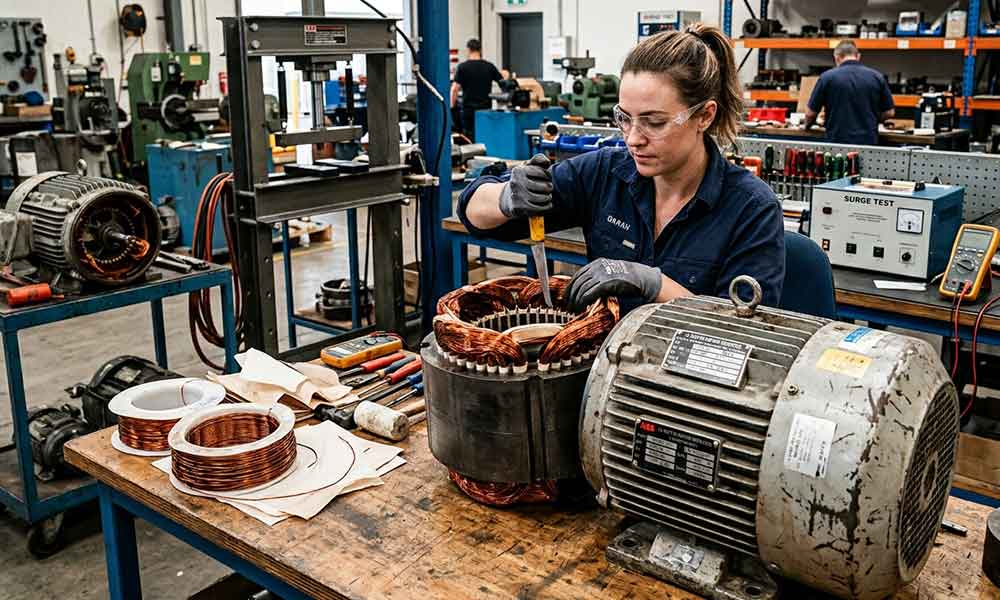
You send an LV motor in for repair, it comes back running, and the job feels done. But a motor that runs is not the same as a motor that was repaired properly. The only real way to know the difference is what’s written in the repair report you get back.
At Deluxe Energy Solutions LLC in Musaffah, Abu Dhabi, we have repaired LV motors across almost every industry you can think of, from small pumps to large production line motors, and we always hand clients a report that backs up the work, not just an invoice. If you want to know what your last repair report should have included, message us on WhatsApp.
Why the Report Matters More Than the Motor Running
A motor can run fine for a few weeks after a rushed repair and then fail again, often during a shift when you can least afford it. A proper report is your proof that the right checks were actually done, not skipped to save time.
If a repair shop hands you a motor with no report, or a report that’s just a line saying “repaired and tested,” that’s a red flag worth noticing.
What a Proper LV Motor Repair Report Should Include
1. Initial Diagnosis Findings
Before any repair work starts, the motor should be tested to identify the actual fault. This usually includes insulation resistance readings and a visual inspection of the windings, bearings, and shaft. Your report should state clearly what was found wrong, not just “motor repaired.”
2. Winding Resistance and Insulation Test Results
If the motor was rewound, the report should show winding resistance values and insulation resistance readings taken after the rewind, not just before. These numbers tell you whether the new windings are actually performing within safe limits.
3. Surge Test Results
A surge test checks for weak spots in the winding insulation that a basic resistance test can miss. This step catches problems that would otherwise show up only after the motor is back in service and under load.
4. Bearing and Shaft Condition
Bearings wear out just as often as windings do. The report should note whether bearings were replaced, and if the shaft was checked for straightness, especially for motors that failed due to vibration or misalignment.
5. Dynamic Balancing Confirmation
Any motor that has had rotor work done should be dynamically balanced before it’s returned. The report should include the balancing grade achieved, not just a statement that it was balanced.
6. Final Load Test
This is the last check before the motor leaves the workshop. It confirms the motor performs correctly under an actual load, not just when spinning freely on a bench. A motor that passes a no-load spin test can still fail under real working conditions.
A Real Example
A client in Mussafah brought us an LV motor that had already been repaired once elsewhere, and it failed again within three weeks. When we opened it up, we found the bearings hadn’t been replaced, only cleaned and reused. The original repair report from the other shop had no mention of bearing condition at all.
Once we rewound the motor properly, replaced the bearings, and ran it through a full load test, it went back into service without issue. The difference wasn’t the motor itself, it was that the first repair skipped steps that should have been standard.
What to Do If Your Report Is Missing Information
If you have a repair report that doesn’t cover these points, it’s worth going back to the provider and asking directly. A reputable repair company will have these records on file even if they weren’t included in your copy. If they can’t produce them, that tells you something about how the repair was actually done.
FAQs
Ask for the repair report showing insulation resistance results, winding resistance values, bearing condition, and final load test results. If any of these are missing, ask the provider to confirm they were done.
A proper rewind includes surge testing and insulation resistance testing after the new windings are installed, along with dynamic balancing. These results should be documented in your repair report.
This usually happens when steps like bearing replacement, surge testing, or final load testing were skipped during the original repair. Reviewing the repair report can help identify what was missed.
Yes, a load test confirms the motor performs correctly under real working conditions, not just when spinning freely. Skipping this step means potential issues may only show up after the motor is already back in service.
A good LV motor repair isn’t just about the motor running when it comes back. It’s about having a report that proves the right tests were done at every stage, from diagnosis to final load testing. If your last repair report was missing any of these details, it’s worth asking questions before you rely on that motor again.
If you want an LV motor repaired properly, with a full report backing up the work, Deluxe Energy Solutions LLC in Musaffah, Abu Dhabi can help. Message us on WhatsApp or visit deluxeenergy.ae.