
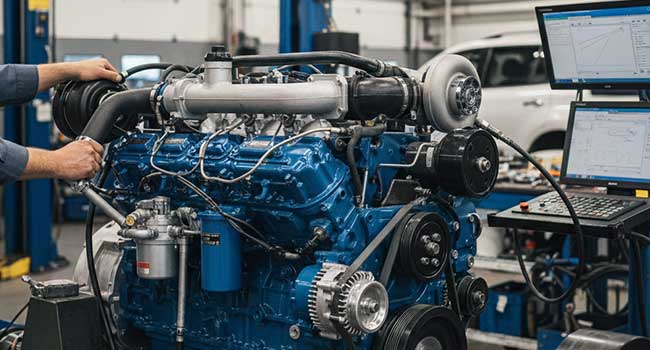
Diesel engines are known for their strength and reliability, but that reputation often hides a reality many operators face: not all engine problems are obvious. Some issues remain hidden until the engine is placed under real working conditions.
Most workshop tests are limited to visual inspections, idle running, or short trial runs. While these checks are useful, they do not tell the full story. This is where diesel engine dyno testing becomes essential.
A dynotest places the engine under controlled load, closely simulating real operating conditions. Only then do certain problems reveal themselves—problems that cannot be accurately detected any other way.
Power Loss That Doesn’t Show at Idle
One of the most common complaints after engine repair or overhauling is reduced power. The engine may start easily, idle smoothly, and rev without hesitation. Yet once connected to a generator, pump, or drivetrain, it struggles to deliver expected output.
This type of power loss often comes from subtle issues such as:
- Incorrect fuel injection timing
- Uneven injector flow rates
- Turbocharger underperformance
- Poor combustion efficiency under load
Under idle or no-load conditions, these problems remain hidden. A dynotest measures actual horsepower and torque across multiple load levels, confirming whether the engine is truly meeting its specifications.
Excessive Fuel Consumption Under Load
Fuel consumption is one of the highest operating costs for diesel engine users. An engine may appear normal during light use but consume significantly more fuel once it is working hard.
Dyno testing allows technicians to measure fuel usage at different load points, helping identify:
- Over-fueling at high load
- Poor air-fuel ratio balance
- Inefficient combustion due to worn or mismatched components
By detecting these issues early, adjustments can be made to improve efficiency and reduce long-term operating costs.
Overheating That Only Happens During Real Work
Overheating problems rarely appear during basic workshop testing. An engine may run at normal temperature while stationary, yet overheat during extended or heavy-duty operation.
Dyno testing pushes the engine to real operating temperatures, making it possible to identify:
- Cooling system inefficiencies
- Improper thermostat operation
- Lubrication problems under sustained load
- Excessive exhaust gas temperatures
Detecting these issues in a controlled environment prevents unexpected shutdowns and serious engine damage in the field.
Turbocharger and Air System Issues
Turbochargers play a critical role in diesel engine performance, particularly under load. A turbo that is slow to spool, leaking boost pressure, or incorrectly calibrated may not show clear symptoms during idle testing.
Under dyno load, technicians can monitor boost pressure and engine response in real time, helping identify:
- Boost leaks
- Incorrect turbo calibration
- Restricted air intake or exhaust flow
Without dyno testing, these problems often lead to poor performance, excessive smoke, and long-term engine stress.
Vibration and Mechanical Imbalance
Some mechanical issues only appear when the engine is producing power. Crankshaft imbalance, flywheel defects, or coupling misalignment may go unnoticed during light running.
Under dyno load, these problems can cause abnormal vibration that accelerates wear on:
- Bearings
- Engine mounts
- Couplings and driveline components
Dyno testing exposes these issues early, protecting both the engine and the equipment it drives.
Emissions and Smoke Problems Under Load
Smoke and emission issues often worsen under heavy load. Excessive black smoke, for example, usually indicates poor combustion or restricted airflow that may not be visible at idle.
Dyno testing allows technicians to observe exhaust behavior across the full operating range, helping pinpoint whether the issue lies in:
- Fuel delivery
- Air supply
- Combustion timing
Why Dynotesting Saves Time and Money
Many diesel engine failures after repair are caused not by major errors, but by small undetected issues. Once the engine is installed and operating in the field, fixing these problems becomes far more expensive and disruptive.
Dyno testing acts as a final verification step. It confirms that the engine can handle real load, deliver rated power, and operate efficiently.
This reduces downtime, prevents costly callbacks, and builds confidence for both service providers and engine owners.
Conclusion
Some diesel engine problems simply cannot be diagnosed through visual checks or no-load testing. Power loss, excessive fuel consumption, overheating, turbocharger faults, vibration, and emissions issues often appear only under real operating conditions.
A dynotest exposes these hidden problems before the engine is put to work, making it one of the most valuable diagnostic and quality-control tools available.