
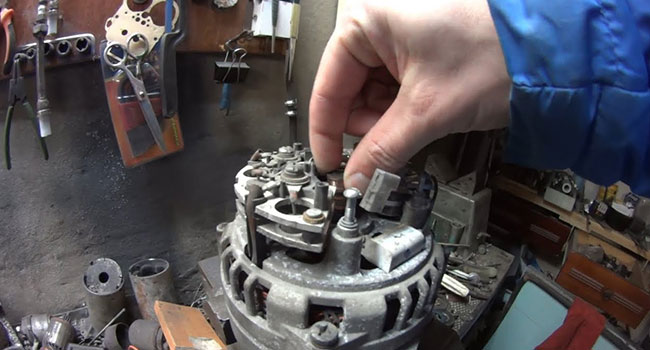
Alternator Repair vs Replacement: What Saves More Money?
When a generator starts showing signs of poor performance, unstable voltage, or frequent shutdowns, the alternator is often the source of the problem. At that point, operators face a common decision: repair the alternator or replace it entirely. The right choice can significantly affect both short-term costs and long-term reliability.
Electric motors play a critical role in powering industrial equipment, machinery, and essential operations. When a motor develops electrical faults, it can lead to reduced efficiency, unexpected downtime, and costly disruptions. Deluxe Energy provides professional motor electrical repair services in Abu Dhabi, offering expert diagnostics, motor rewinding, insulation testing, and complete electrical restoration. Our experienced technicians ensure that motors operate safely, efficiently, and reliably, helping businesses minimize downtime and extend the lifespan of their equipment.
Understanding Alternator Repair
Alternator repair focuses on fixing or replacing only the faulty components rather than the entire unit. Common repair tasks include:
- Replacing worn bearings
- Repairing or rewinding damaged windings
- Changing faulty voltage regulators
- Cleaning and restoring electrical connections
Repair is usually faster and far less expensive than replacement, especially when the alternator’s core structure is still in good condition.
When Repair Makes Financial Sense
Repair is often the better option when:
- Damage is limited to specific components
- The alternator is relatively new
- Replacement parts are readily available
- Downtime needs to be minimized
In many cases, a well-executed repair restores performance close to original specifications without the cost of a new unit.
The Cost of Full Replacement
Replacing an alternator involves not only the price of the new unit, but also installation, alignment, testing, and potential modifications. Lead times can be long, particularly for large or specialized alternators.
Replacement may be necessary when:
- The alternator core is severely damaged
- Repeated repairs have failed
- Parts are no longer available
- Efficiency loss is significant
While replacement ensures a fresh start, it comes at a higher upfront cost.
Long-Term Cost Comparison
From a financial perspective, repair usually saves money in the short term. When done professionally, repairs can extend alternator life for many years.
Replacement becomes more cost-effective only when repair costs approach the price of a new alternator or when reliability cannot be guaranteed after repair.
Reliability and Performance Considerations
Modern repair techniques, including proper testing and balancing, often restore alternator performance to near-original levels. The key is quality workmanship and proper diagnostics.
Poor repairs, however, lead to repeat failures, making replacement seem cheaper in hindsight. Choosing an experienced service provider is critical.
Practical Example
A generator alternator with worn bearings and a faulty regulator can be repaired quickly at a fraction of the replacement cost. Replacing the entire alternator in this case would be unnecessary and expensive.
Alternator repair usually saves more money than replacement when damage is limited and the core is sound. Replacement should be reserved for severe damage or when repairs are no longer practical. A careful assessment ensures the most cost-effective and reliable solution.